Plates Prints Maitres Jules Cheret Poster France has a wide selection and variety of small size posters Covers and prints. From The Chaix Imprimerie printing the Affiches Illustrees to Affiches Etrangeres to Menus and then there are the Das Plakat plates and Estampe Moderne by Champenois Imprimerie in Paris. Also Scena Illustrata keeping up on the Art scene in Florence Italy and Journals like Le Rire and Gil Blas and Figaro Illustres as well. Scena Illustrata A wide variety of offerings of French and Italian small size posters
No products were found matching your selection.
Based on what you were looking for, you might like:
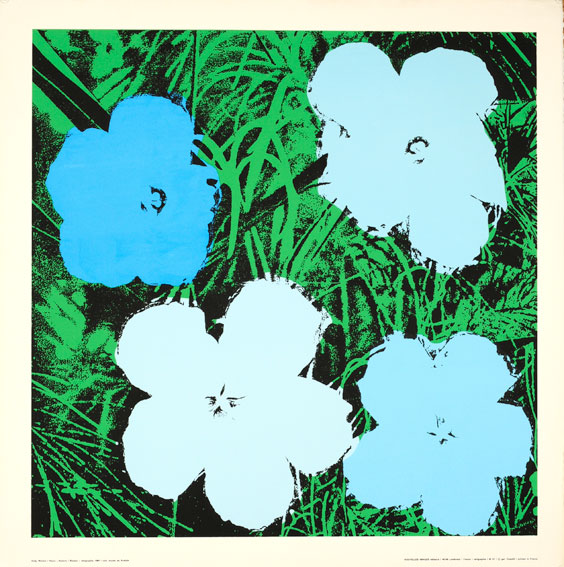
(circa 1970) Artist: Warhol, Andy Printer: Nouvelles Editeurs, France On / Off linen: On Linen Print Technique: offset lithograph Year : 1970c Size: 27.5 x 27.5 inches
Mounted on Linen
description : This collectible print from Andy Warhol’s famous “Flowers” series, originally created in 1964. The print was made available to the public in France, produced by Nouvelles Images Editeurs in 1970, measuring 27.5 x 27.5 inches and is professionally mounted on linen by Museum quality artisan.
Warhol’s “Flowers” series represents a key shift in his career from commercial illustrator to contemporary artist. The series demonstrates his expertise in screen printing, transforming everyday subjects into iconic images. Printed on heavy Canson paper, this piece is notable for its vibrant colors and high-quality craftsmanship, making it both visually striking and durable.
This print not only highlights Warhol’s impact on contemporary art and pop culture but also offers a rare chance to own a meaningful part of art history. It’s ideal for Warhol collectors, Pop Art enthusiasts, or anyone looking to invest in a significant 20th-century artwork..
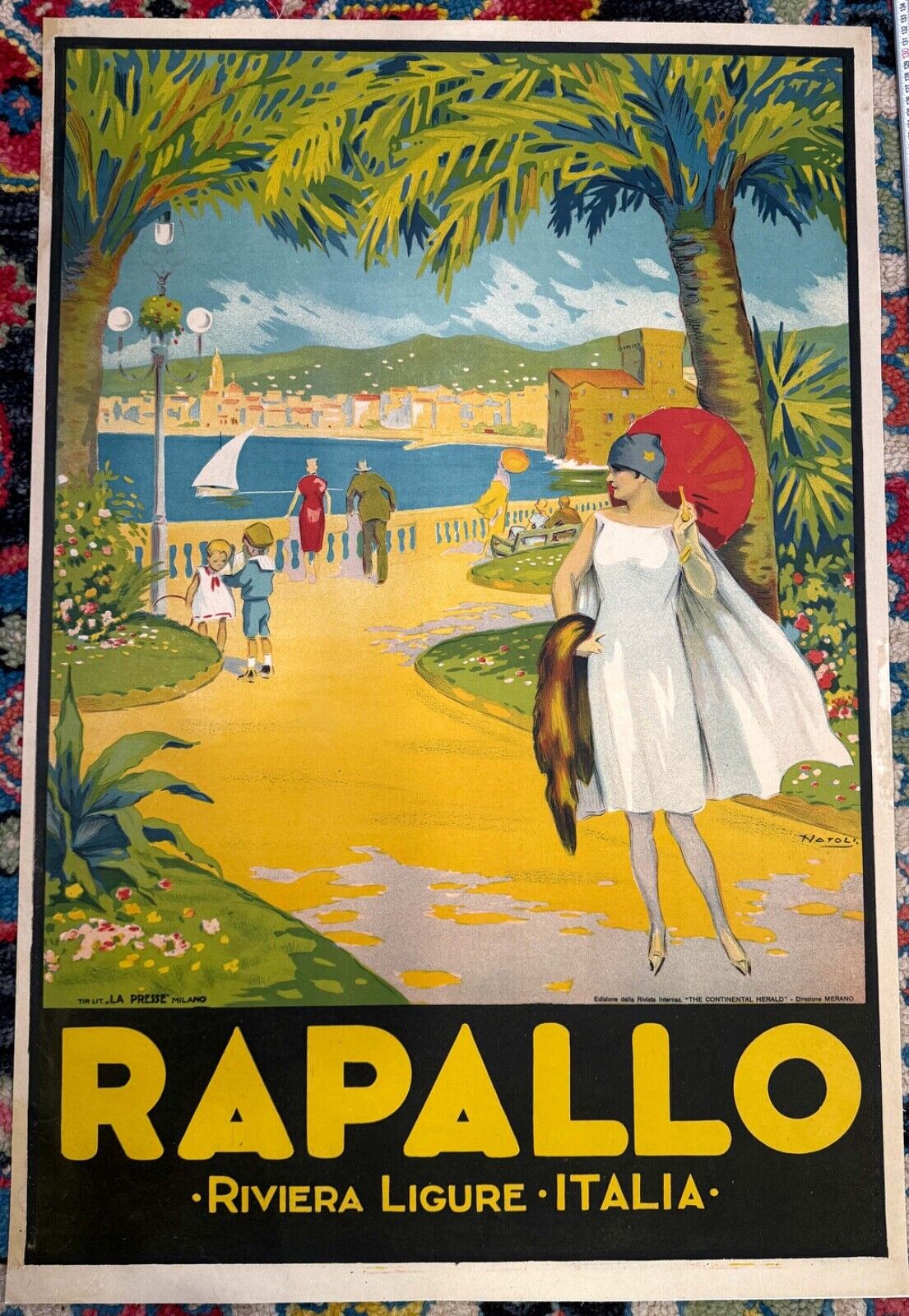
Artist: Natoli Domenico detto Scapin Printer: Litografia “La Presse”, Milano Size: 27.5 x 39 in / 70 x 100 cm On/Off Linen: On Linen Print Technique: Lithograph Year: 1924 Condition & Comments: Nice condition, colors bright, some slight blemishes in margin; otherwise excellent
Ravello is a historic village perched above Italy’s Amalfi Coast, dating back to the 12th century. One of its famous landmarks is Villa Rufolo, built by a wealthy merchant family in the 1200s. The villa’s medieval architecture blends Greek, Arab, and Moorish influences due to Ravello’s location along Mediterranean trade routes. Villa Rufolo was first mentioned in 1353 in Boccaccio’s Decameron.
Ravello became a popular retreat for artists, musicians, and writers in the late 1800s during the Grand Tour era. Famous visitors included Robert Wagner, who composed part of his Parsifal opera here, as well as Virginia Woolf, D.H. Lawrence, Winston Churchill, and Greta Garbo. Today, Ravello still attracts celebrities seeking privacy on the Amalfi Coast.
The Italian National Tourist Board (ENIT), established in 1919, created posters like this one to promote travel within Italy. This particular poster, featuring Villa Rufolo, was designed by Publio Morbiducci (1889-1963), a noted artist known for his sculptures and designs for Italian currency and the 1936 Olympics.
Artist: Razzia Printer: Razzia, Fontainebleau Size: 29.5 x 37 inches / 75 x 94 cm On/Off Linen: Unlined Print Technique: Numerique Condition & Comments: Excellent
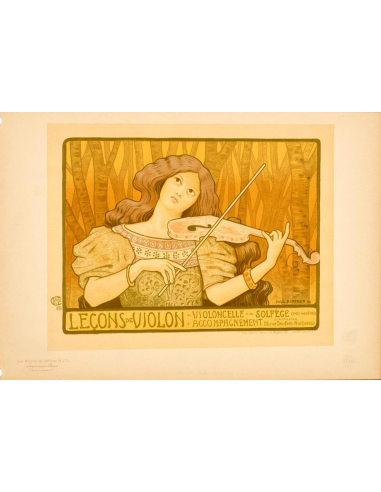
LECONS DE VIOLON BY BERTHON FOR LES MAITRES DE L’AFFICHE
Les Maitres de l’affiche were stone lithographs printed by the Chaix Imprimerie in paris between the years 1895 and 1899. The celebrated the masters of the posters of that period. Paris for 4 plates to arrive every month. The plate is in excellent condition.